
title: The Renewable Energy Storage Challenge
description: Explore why energy storage is critical for renewable energy transition, the leading technologies (lithium-ion, flow batteries, pumped hydro), and how grid-scale storage works.
The Renewable Energy Storage Challenge
Introduction
The sun doesn’t always shine and the wind doesn’t always blow—yet electricity demand continues around the clock. This fundamental challenge underlies the renewable energy transition. Storing energy when production exceeds demand and releasing it when demand exceeds production is essential for a grid powered by renewables. The good news: storage technologies are advancing rapidly. The challenge: scaling them to meet global needs.
Why Energy Storage Is Critical
Renewable energy’s variability creates supply-demand mismatches. Solar peaks at midday but demand often peaks in evening. Wind blows unpredictably. Without storage, excess renewable energy goes to waste, and shortfalls require backup generation—often from fossil fuels.
Grid stability requires continuous balance. Power grids must maintain exact frequency and voltage, which becomes harder as renewable penetration increases. Storage provides grid services that maintain stability—frequency regulation, voltage support, and spinning reserves.
Peak demand management reduces expensive infrastructure. Storage can discharge during peaks, reducing the need for costly peaker plants. This economics improves as storage costs fall.
Electrification of transportation and heating increases demand. Electric vehicles can provide vehicle-to-grid storage, but coordination challenges remain. Building dedicated storage at scale is essential.
Decarbonization requires eliminating fossil fuels entirely. Storage replaces natural gas peakers, provides backup for calm wind days, and enables renewable-dominated grids. No major economy can reach net-zero without massive storage deployment.
Leading Energy Storage Technologies
Lithium-ion batteries dominate current deployment. Tesla’s Megapacks, Fluence, and BYD supply utility-scale batteries globally. Costs have fallen over 90% in a decade, making lithium-ion competitive in many applications.
But lithium-ion has limitations. Raw material constraints, supply chain vulnerabilities, and fire risks drive interest in alternatives. Lithium itself may become scarce as EV and storage demand explodes.
Flow batteries store energy in liquid electrolytes. Vanadium redox flow batteries offer long duration storage—8-12 hours—ideal for multi-day energy shifting. They are more expensive than lithium-ion upfront but have longer lifetimes and no degradation.
Pumped hydro is the largest form of grid storage globally, accounting for over 90% of storage capacity. It pumps water uphill during cheap electricity, releases it through turbines when needed. Geographic constraints limit expansion but remain the lowest-cost option where feasible.
Compressed air energy storage (CAES) stores air underground or in tanks, releasing it through turbines. Advanced adiabatic CAES captures heat, improving efficiency. Several projects are advancing globally.
Gravity storage uses raising and lowering weights—concrete blocks, sand, or even railway cars. Energy Vault and similar companies propose systems that could provide long-duration storage at scale.
Hydrogen is emerging as seasonal storage. Electrolyzers split water to make hydrogen when excess renewable electricity is available. Fuel cells or turbines convert hydrogen back to electricity during shortages. Costs remain high but falling.
How Grid-Scale Storage Solutions Work
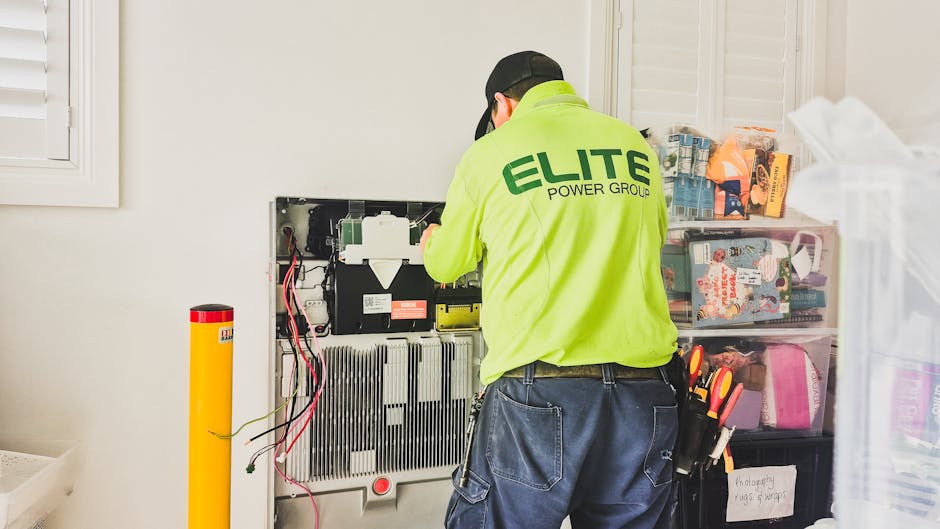
Utility-scale battery installations combine thousands of individual battery modules into containerized systems. Sophisticated battery management systems control charging, discharging, and thermal conditions. Grid-tie inverters convert DC battery power to AC for grid integration.
Storage systems provide multiple services. Primary frequency response reacts in seconds. Arbitrage charges during low prices, discharges during high prices. Capacity firming smooths renewable output fluctuations. Each service has different technical requirements and economic value.
Hybrid installations pair storage with renewable generation. Co-located solar-plus-storage captures midday production, releases it during peak evening hours when prices and demand are highest. Wind-plus-storage addresses wind’s more variable nature.
Grid operators increasingly procure storage through competitive auctions. Battery costs have fallen enough that storage often wins contracts. Gigawatt-scale procurement is underway in California, Australia, and increasingly worldwide.
Challenges to Scale
Supply chains remain constrained. Lithium, nickel, cobalt, and other battery materials face potential shortages as storage scales. Recycling and alternative chemistries can help but need development.
Permitting and interconnection delays slow deployment. Storage facilities require sites, approvals, and grid connections that can take years. Streamlining processes can accelerate deployment but faces local opposition.
Workforce development is critical. Installing, operating, and maintaining storage at scale requires trained workers. Training programs are expanding but may lag demand.
Market structures don’t always value storage appropriately. Grid services markets, capacity markets, and wholesale electricity markets each compensate storage differently. Reforms could improve storage economics.
Recycling remains nascent. Most battery installations are too new to need recycling, but end-of-life management looms. Building recycling capacity now prevents future waste crises.
Conclusion
Energy storage is no longer the missing piece of the renewable puzzle—it is being deployed at accelerating scale. Costs continue falling, technologies are maturing, and experience is building. The transition from experimental to mainstream is underway.
But faster progress is needed to meet climate goals. Storage deployment must accelerate dramatically through this decade to enable grids that can operate without fossil fuels. This requires continued cost reduction, supply chain development, permitting reform, and grid planning.
The storage challenge is solvable. The technologies exist. The economics work. The remaining barriers are political will and execution speed. Accelerating deployment is essential—and happening.
Leave a Reply