
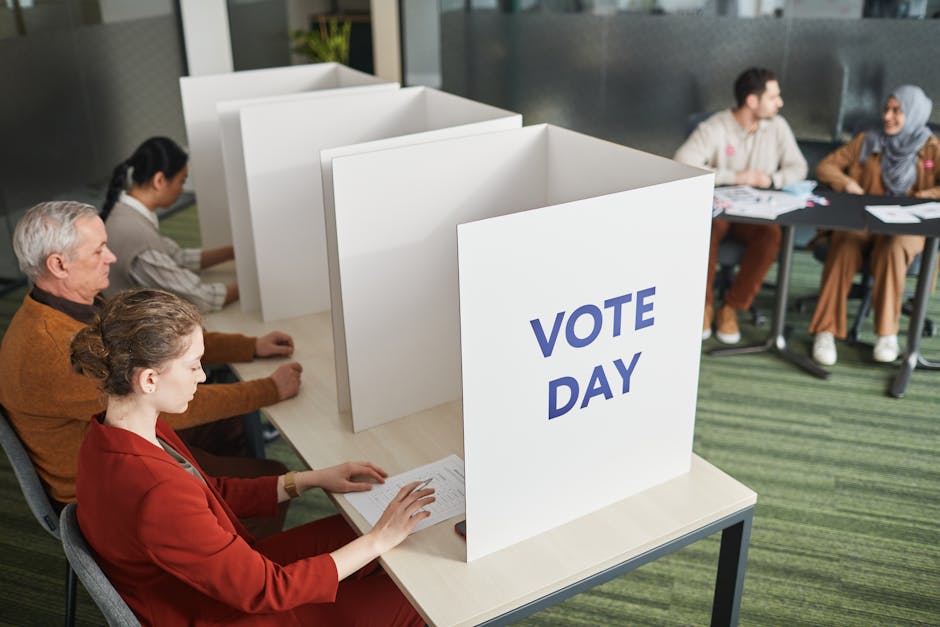
A comprehensive guide to the SAVE America Act, including proof of citizenship requirements, photo ID mandates, and what it means for voters in 2026.
The SAVE America Act: What the Biggest Voter Registration Shakeup in Decades Means for You
Published February 20, 2026
The way Americans register to vote and cast their ballots could be on the verge of the most sweeping overhaul in modern history. On February 12, 2026, the U.S. House of Representatives narrowly passed the Safeguard American Voter Eligibility Act — better known as the SAVE America Act — in a 218-213 party-line vote. The bill, backed by President Donald Trump, would require documentary proof of citizenship to register to vote and a photo ID to cast a ballot in federal elections. If enacted, every provision would take effect immediately.
Here is what you need to know about the bill, the political battle surrounding it, and how it could affect millions of voters ahead of the 2026 midterm elections.
What the SAVE America Act Would Require
The legislation introduces two major new requirements for federal elections:
Proof of citizenship at registration. Under current law, people registering to vote must attest under penalty of perjury that they are U.S. citizens. The SAVE America Act would replace that sworn statement with a documentary requirement. Acceptable documents include a valid U.S. passport, a birth certificate paired with a photo ID, or a naturalization certificate. A driver’s license alone would not suffice in most states, since licenses generally do not indicate citizenship status.
Photo ID at the polls. The bill would also create a national photo ID requirement for voting. Acceptable forms of identification are limited to U.S. passports, state-issued driver’s licenses or ID cards, military IDs, and tribal IDs. Voters who arrive without an acceptable ID would be allowed to cast a provisional ballot but must return within three days with proper identification — or sign an affidavit citing a religious objection to being photographed.
Additionally, the bill would require states to regularly cross-reference their voter rolls against the Department of Homeland Security’s Systematic Alien Verification for Entitlements (SAVE) database to identify potential noncitizens on the rolls.
Why Supporters Say It Is Necessary
Proponents argue that the current attestation-only system is too weak. Rep. Bryan Steil (R-WI), chair of the House Administration Committee, said the bill “takes a strong piece of legislation, the SAVE Act, and makes it even stronger.” Supporters point to Gallup polling showing that roughly 8 in 10 Americans support both proof-of-citizenship and photo ID requirements for voting.
The bill builds on the original SAVE Act, which passed the House in March 2025 but stalled in the Senate. This updated version adds the photo ID mandate and new guidelines for handling name discrepancies on documents — a response to criticism that the earlier bill would disproportionately affect women who changed their last name after marriage.
Why Critics Call the SAVE America Act a Threat to Voting Rights
Opponents paint a very different picture. Voting rights organizations, Democratic lawmakers, and several election officials warn the bill could disenfranchise millions of eligible American citizens.
Millions lack accessible documents. According to a 2023 survey conducted by SSRS on behalf of the University of Maryland, roughly 9 percent of voting-age citizens do not have easy access to a document proving their citizenship. The Campaign Legal Center estimates that more than 21 million Americans would struggle to produce the required paperwork. People of color, young voters, elderly voters, and married individuals who have changed their names are disproportionately affected.
Mail and online registration would be gutted. In 2022, more than 7 million Americans registered to vote by mail, and nearly 11 million registered online. Since the bill requires in-person presentation of original documents, these registration pathways would be effectively eliminated or require major overhauls.
Election officials say implementation is impossible on short notice. Multiple secretaries of state have sounded the alarm. Minnesota Secretary of State Steve Simon called the bill “a nightmare for election administrators.” Maine Secretary of State Shenna Bellows noted that her state would need to train staff across 487 municipalities from scratch — with no additional federal funding provided in the legislation. Several officials compared the potential chaos to the repeated delays that plagued the rollout of REAL ID requirements at airports.
Criminal penalties for election workers. The bill would impose prison sentences of up to five years on election officials who register voters without proper proof-of-citizenship documents, even if the voter in question is a legitimate citizen. Critics say this could have a chilling effect on local officials already struggling with recruitment and retention.
The Kansas precedent. Kansas implemented a proof-of-citizenship requirement in 2013. Over the following years, 31,089 people — roughly 12 percent of all registration applicants — were unable to complete their registration. During the same period, the state identified only 39 confirmed noncitizens who had registered. A federal court struck down the Kansas law in 2018.
The North Carolina Voter Rolls Deal
While the SAVE America Act dominates the national debate, a significant bipartisan agreement emerged at the state level. On February 17, 2026, Republicans and Democrats in North Carolina reached a deal over the state’s voter rolls. The state’s Board of Elections had launched a project called “Registration Repair” in July 2025 to contact voters and collect missing identification information, including driver’s license numbers and Social Security numbers from voters who lacked licenses.
Democrats characterized the agreement as a safeguard of voter rights, while Republicans portrayed it as a win for election integrity. The deal is set to remain in effect through 2027 and could serve as a model for bipartisan cooperation on voter roll maintenance — a stark contrast to the contentious federal fight.
What Happens Next in Congress
The bill now moves to the Senate, where its prospects are uncertain at best. Republicans hold a 53-47 majority, but the Senate’s 60-vote filibuster threshold means the bill would need bipartisan support to advance. No Senate Democrats have signaled support.
Some Republicans have floated the idea of forcing Democrats into a “talking filibuster,” which would require them to physically hold the floor to block the bill rather than simply invoking a procedural objection. However, Senate Majority Leader John Thune has been lukewarm on the idea, recognizing it could tie up the chamber for weeks and derail other legislative priorities.
President Trump has signaled he may act unilaterally if Congress does not pass the bill. In a recent social media post, he wrote: “There will be Voter I.D. for the Midterm Elections, whether approved by Congress or not!” However, a 2025 executive order from Trump that sought to impose proof-of-citizenship requirements was blocked by federal judges, who ruled the provisions exceeded presidential authority under the Constitution, which grants states and Congress — not the executive branch — control over election rules.
What the SAVE America Act Means for Voters in 2026
For now, current voter registration rules remain in effect. No new documentation requirements apply unless and until the SAVE America Act clears the Senate and is signed into law. However, the political momentum behind proof-of-citizenship and voter ID legislation means voters should be aware of potential changes.
Here are practical steps every eligible voter can take right now:
- Check your registration status. Visit your state’s election website or use NPR’s voter registration guide at apps.npr.org/voter-registration-2026-mail to confirm you are registered.
- Gather your documents. Even if the SAVE America Act does not pass, having a valid photo ID and access to your birth certificate or passport ensures you are prepared for any future requirements.
- Read our 2026 Voter Registration Changes: Laws, Requirements & What You Need to Know
- Know your state’s rules. Thirty-six states already require some form of ID to vote, with requirements varying from photo ID to utility bills. Check what your state requires before Election Day.
- Watch for deadlines. Primary election dates vary by state, and registration deadlines can fall weeks before the election itself.
- Voter Turnout Trends Over Time: Understanding Long-Term Patterns in U.S. Electoral Participation
- Who’s On Your Ballot? A Voter’s Guide to State and Local Elections
The Bigger Picture
The debate over the SAVE America Act reflects a fundamental tension in American democracy: how to balance election security with broad voter access. Supporters frame the bill as a common-sense safeguard against fraud. Opponents see it as a solution in search of a problem — one that risks silencing millions of legitimate voters to address an issue that data shows is vanishingly rare.
Whether the bill becomes law or not, the conversation it has ignited will shape election policy for years to come. Staying informed and prepared is the best way for every citizen to ensure their voice is heard.
Leave a Reply